
Your Guide to Productivity

Hello everyone! Welcome to today's blog, your personal guide to productivity!
On the surface, productive seems simple. Yet, it feels nearly unattainable for most. Whether it be a chronic procrastination that inhibits our ability to complete tasks or an unhealthy sleep schedule that impairs our concentration, individuals find it universally difficult to achieve productivity on a day-to-day basis.
However, productivity is well within reach for each and every one of you! To conquer this goal, we will dive into 6 life-changing mechanisms that will boost your efficacy and efficiency.
Daniel Pink is a non-fiction American author who raises awareness on ways to challenge conventional thinking, upgrade lives, and provide insight into the human condition. Today, we will integrate psychology into his productivity advice to construct simple, but powerful lessons that can be applied to daily life.
(1) Do Less
Instead of writing down a long, daunting list of to-do's, minimize your list. Simply, do less. People with shorter lists tend to accomplish more. And the truth is, they also do them better.
Doing less comes with numerous benefits-both cognitive and emotional: It reduces how overwhelmed you feel, improves your focus on the most important tasks, thus, encouraging stronger prioritization, allows your brain to process tasks with more ease, and fosters your satisfaction and sense of accomplishment through "small wins."
Pink suggests that a list of five to-do's is both manageable and effective. Out of the five, choose one as your most important task, or "MIT." This task needs to be conquered first, without exception. He instructs, "Start it, finish it, don't do anything else. When you're done, you'll feel a sense of accomplishment, and you'll have made progress toward your most important goal."
(2) Create a To-Don't List
Sounds odd, right? Though the term, "To-Don't List" may be unfamiliar to you, it's a simple concept. This list will consist of three things that Pink describes as stealing your time, draining your energy, and hijacking your focus.
Write down at least 3 things you want to avoid doing that day. It could be checking your text messages and emails-even doom scrolling on your phone. By establishing what actions cause you to be less productive or result in mindless, busy work, your To-Don't list will detail 3 tasks that you should avoid in order to strengthen your momentum and subsequent efficiency throughout the day.
"Remember, getting more and better work done isn't about addition. It's often about subtraction." -Daniel Pink
(3) Protect Your Golden Hours
Pink calls it a "window of time" during the day in which your brain operates with the sharpest clarity. This "window," whether it be at 6am in the morning or 8pm at night, needs to be protected at all costs. Carving out these particular hours and reserving them for "deep work," essentially "work that requires your full attention and complete focus," will allow you to complete tasks with your full attention at your fullest capacity.
It's important to note that beginning your "window" with the hardest task on your To-Do List is paramount. Tackling the most difficult task first leads to the strongest feelings of accomplishments according to Northwestern University's study.
(4) Systematize the Small Things
A helpful method for completing the smaller, less significant tasks with efficiency is to apply the 2 Minute Rule. If you can do something in 2 minutes, do it immediately. Automating rather than overthinking will create a smoother, quicker process.
Minimize the amount of choices you make each day. American Behavioral Psychologist Roy Baumeister coined the theory of decision fatigue explaining that willpower and decision-making abilities are inherently limited resources. As these resources are used up, or simply when we are forced to make too many decisions, the quality of our decision-making visibly declines. Furthermore, psychologist Barry Schwartz discovered the Paradox of Choice: Having too many choices becomes overwhelming and more difficult for the brain to process. Evidently, reducing the number of times you make decisions each day can truly conserve more energy and boosts your ability to make wiser, more rational decisions.
(5) Track Your Progress
Harvard professor Teresa Amabile found that individuals experience the greatest motivation when they make progress in meaningful work. The act of moving something forward, or making progress, encourages us to keep doing our best.
In order to ensure that we recognize our progress, write down 3 ways you made progress at the end of each day. Regardless of how seemingly trivial, every little step forward immensely contributes to your overall feelings of self-satisfaction and improves your drive. Following this positive feedback loop builds your sense of progress.
(6) Allow Yourself to Recharge
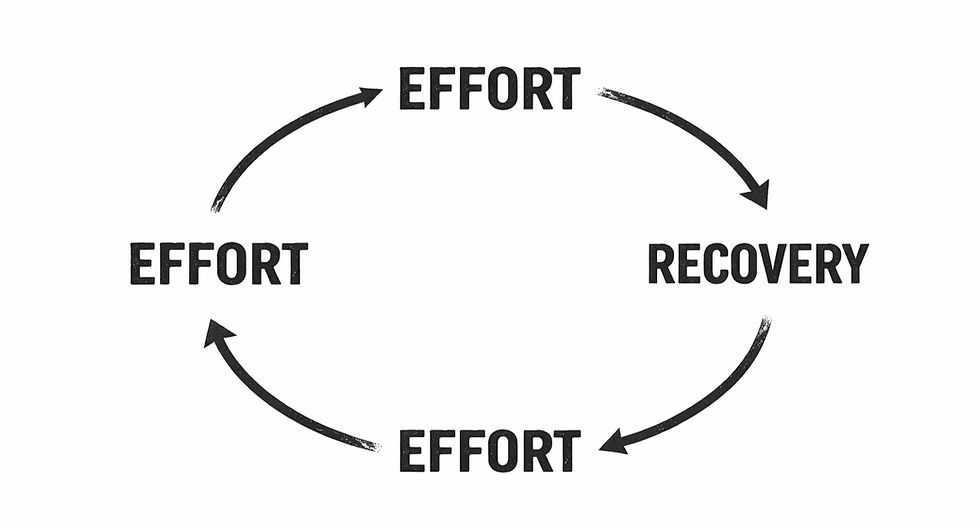
Being productive doesn't mean you need to grind endlessly until the day is over. Rather, the most optimal productivity comes from taking breaks. As Pink stated, "Breaks aren't a deviation from performance. They're a component of high performance."
People are not physiologically built for continuous, nonstop effort. Adopting cycles that are sustainable is critical to productivity. The most restorative breaks don't always look the same for everyone in each situation, but there are a few non-negotiable principles to ensuring healthy breaks.
A short break is far better than no break at all
Movement is more effective than remaining stationary
Nature is the most rejuvenating environment to recharge in
Breaks with others are superior to spending breaks alone
Breaks must be phone-free
Taking a break does translate to laziness or lost time. Truthfully, its capacity to refocus, reset, and revive the mind make it a powerful tool for productivity.
Conclusion
Ultimately, these 6 tips can create life-changing improvements to your daily output, satisfaction, and larger goals. Remember that making progress each day, no matter how small, is what truly matters.
Sources
Pink, Daniel. "Give Me 12 Minutes and I'll Give You 30 Years of Productivity Advice." YouTube, Uploaded by Daniel Pink, 14 September 2025, https://youtu.be/MN_LkumE3Ig?si=ozgGQyrPnPwPOxzG.
Pignatiello, G. A., Martin, R. J., & Hickman, R. L. (2018). Decision fatigue: a Conceptual Analysis. Journal of Health Psychology, 25(1). https://doi.org/10.1177/1359105318763510
The Paradox of Choice: | Office of Graduate Education. (n.d.). https://oge.mit.edu/the-paradox-of-choice/


Comments